Which outfit should I wear today?
Dress for the hours you will spend outside, not for the daily high. Mornings run colder than afternoons, and evenings drop again, so one number rarely covers a full day. Some weather tools split the day into morning, afternoon, and evening for this reason. When your plans run past dinner, use the evening temperature and pack a layer for the ride home. Source
Here is how to get your answer in under a minute:
- Pick Today or Tomorrow. Use my location, search a U.S. city or ZIP for an area forecast, or type a temperature.
- Review the forecast-filled wind and rain options, choose Cold, Normal, or Warm comfort, and say whether you will be indoors, outdoors, or both.
- Pick your plan: casual, work, school, church, active, or event.
- Optionally choose Any, Menswear, or Womenswear for the example, then independently choose pants, a skirt or dress, or Any. Every category can use the skirt route. Category changes the clothes, not the temperature calculation.
The result lists six pieces: a base, a middle layer, an outer layer, bottoms, shoes, and accessories. Optional pieces are optional: if you already own a sweater and a jacket that fit the row, you are done shopping. Wear the combination you own that lands closest to it.
Your what to wear today result starts with one sentence naming the layers, then shows air temperature and Feels like. Today selects the forecast hour covering the current time in the chosen city, or the next available hour if the current interval is missing. Today shows a rolling 24-hour window: the current forecast hour and the following 23 hours, including available daytime and nighttime forecasts across midnight. Date labels and selected-hour sources use the city’s local time. Missing forecast hours are not filled in. Tomorrow shows available hours for the next local calendar date. Tomorrow initially selects the lowest feels-like daytime hour, or its first available hour when no daytime hours are available. Click an hour in the trend panel to show its weather and rebuild your outfit using that hour’s temperature, wind, humidity, and precipitation chance. The selected hour stays highlighted; keyboard users can use the arrow keys, Home, and End. A nearby outfit preview updates with it, with a compact bottom preview on small screens when the result is out of view. Use View outfit to move to the full checklist. Changing the city or date starts a new forecast selection. Your comfort, plans, and clothing route stay in place. The displayed low, high, and swing cover available forecast hours, not necessarily a complete midnight-to-midnight range. The selected hour’s recommendation uses its own weather. Range and later-layer hints remain in the forecast details and do not replace that selection. Night icons follow the forecast’s day/night flag; neither the hourly forecast nor the fallback is a live observation.
What to wear today by temperature (°F)
The table lists the starting outfit for each band. Read down to your number, then read the matching band below it for specific items. The 50s, 60s, and 70s each have a dedicated guide: what to wear in 50 degree weather, what to wear in 60 degree weather, and what to wear in 70 degree weather.
Editorial starting points, not official temperature limits. Adjust for your comfort, activity, and forecast.
| Temperature | Base and middle | Outer layer | Bottoms and shoes |
|---|---|---|---|
| Below 40°F | Long-sleeve base layer. Warm sweater or fleece. | Warm coat. | Warm trousers, with an optional base layer. Sturdy closed shoes or boots suited to the ground. |
| 40–49°F | Long-sleeve top. Sweater or fleece. | Jacket or coat warmer than your mild-day layer. | Jeans, chinos, or trousers. Closed shoes or boots. |
| 50–54°F | Long-sleeve tee or thermal top. Sweater, hoodie, or fleece. | Light puffer, wool coat, or lined trench. | Jeans, chinos, or trousers; tights under a skirt. Boots or closed sneakers. |
| 55–59°F | Long-sleeve tee or T-shirt. Light sweater or sweatshirt. | Denim jacket, trench, or shirt jacket. | Jeans, chinos, or a midi skirt. Sneakers, loafers, or ankle boots. |
| 60–64°F | Long-sleeve tee or thin knit. Light sweater, sweatshirt, or overshirt. | Light denim or utility jacket, or unlined trench. | Jeans, chinos, or trousers. Sneakers, loafers, or ankle boots. |
| 65–69°F | T-shirt or short-sleeve top. Optional thin cardigan or overshirt. | Usually none by day; carry one for evening. | Jeans, chinos, midi skirt; shorts if you run warm. Sneakers, loafers, or flats. |
| 70–79°F | Lightweight top. Optional light layer for your indoor plans. | Carry a light layer if your plans call for one. | Light trousers, skirt, or optional shorts. Shoes comfortable for your route. |
| 80°F and above | Lightweight, loose-fitting top. Usually none in our warm-weather starting outfit. | Only a layer required for rain or your venue. | Lightweight loose trousers, skirt, or shorts. Comfortable footwear suited to the activity. |
On a narrow screen, scroll the table sideways. The 50s and 60s rows follow the existing Atlas temperature guides.
What to wear today: one basic example for each comfort band, with optional womenswear and shared skirt routes. Any category can use any route; optional layers are listed, not required. The skirt pictures show skirts, rather than dresses.
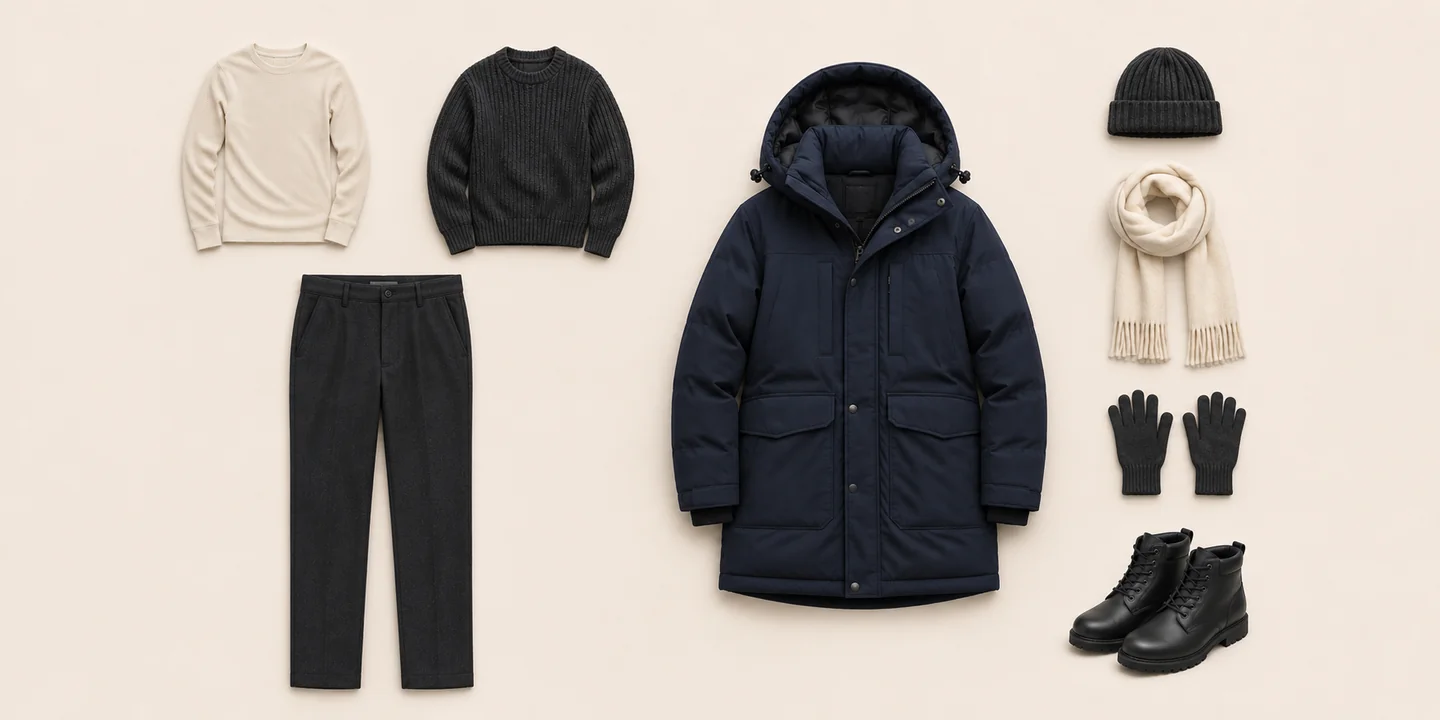
Cream long-sleeve top; Black sweater; Navy hooded coat; Charcoal trousers; Black ankle boots; Black beanie, cream scarf, and black gloves.
Basic outfit illustration, not the only way to dress. Add or remove optional layers for your outing.
Below 40°F: womenswear pants and shared skirt examples
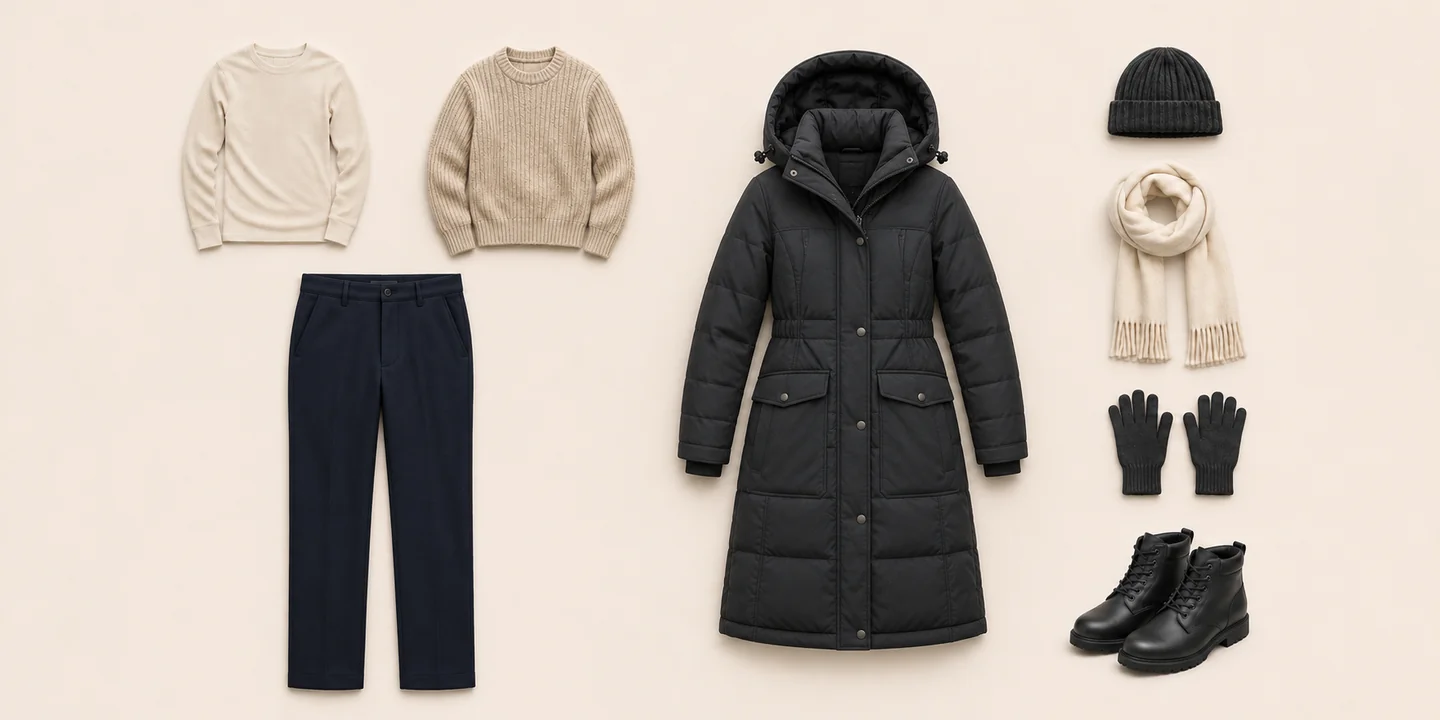
Cream long-sleeve top; Beige cardigan; Black hooded coat; Navy trousers; Black ankle boots; Black beanie, cream scarf, and black gloves.
Basic outfit illustration, not the only way to dress. Add or remove optional layers for your outing.
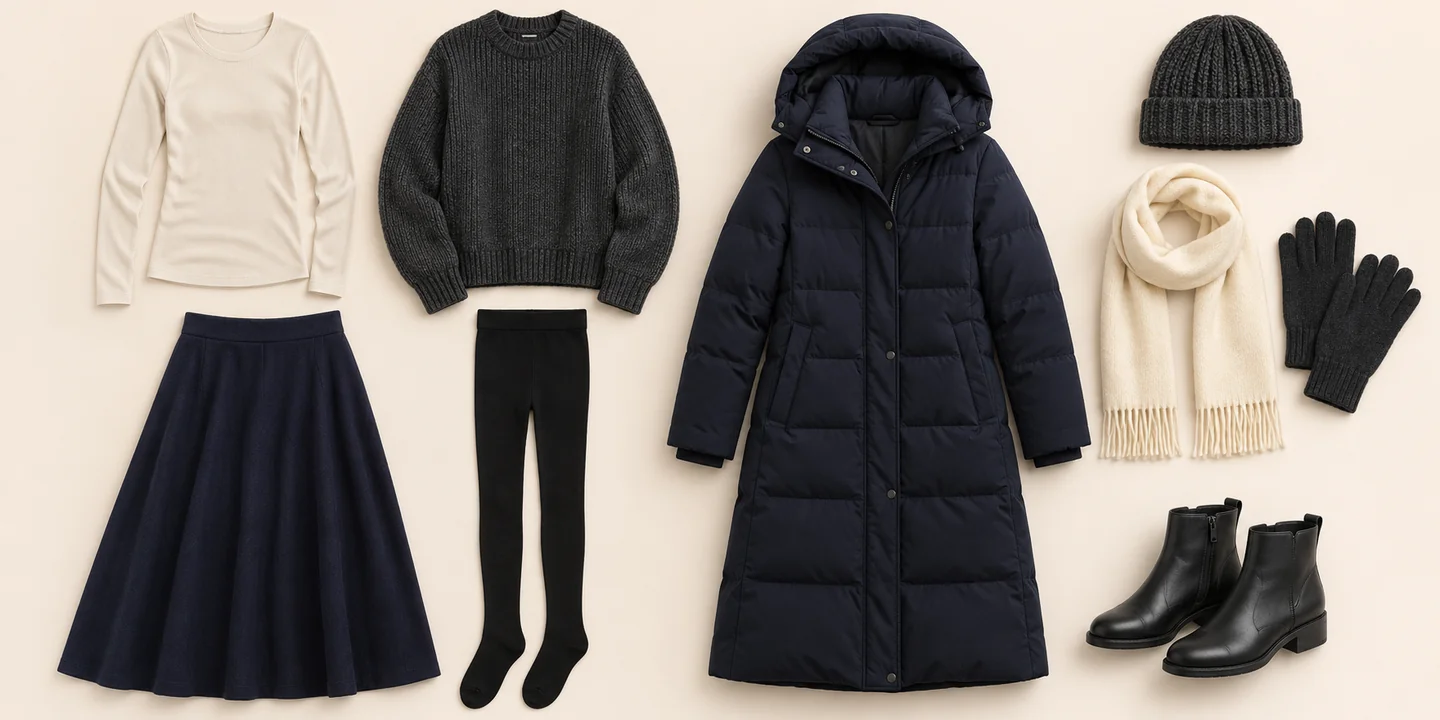
Cream long-sleeve top; Black sweater; Navy hooded coat; Navy skirt with black tights; Black ankle boots; Black beanie, cream scarf, and black gloves.
Basic outfit illustration, not the only way to dress. Add or remove optional layers for your outing.
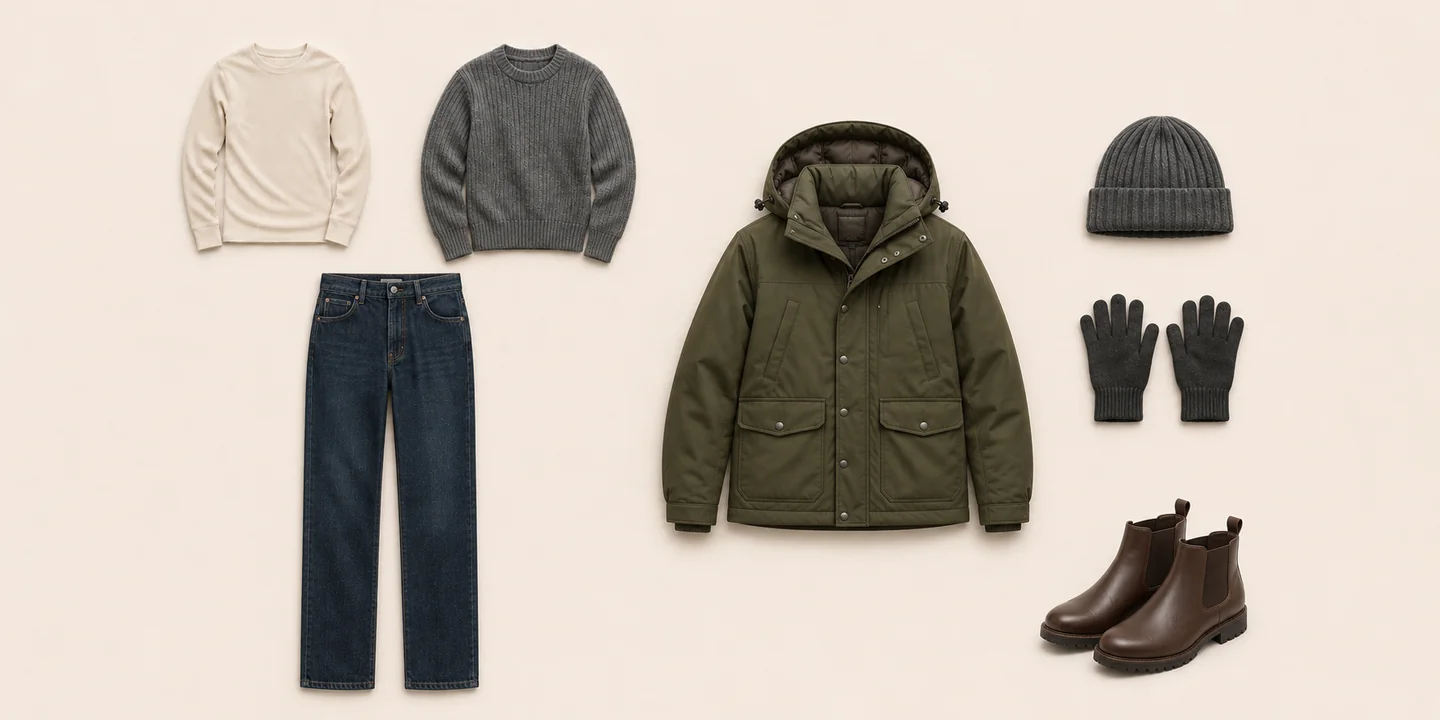
Cream long-sleeve top; Gray sweater; Olive hooded jacket; Dark jeans; Brown ankle boots; Gray beanie and black gloves.
Basic outfit illustration, not the only way to dress. Add or remove optional layers for your outing.
40–49°F: womenswear pants and shared skirt examples
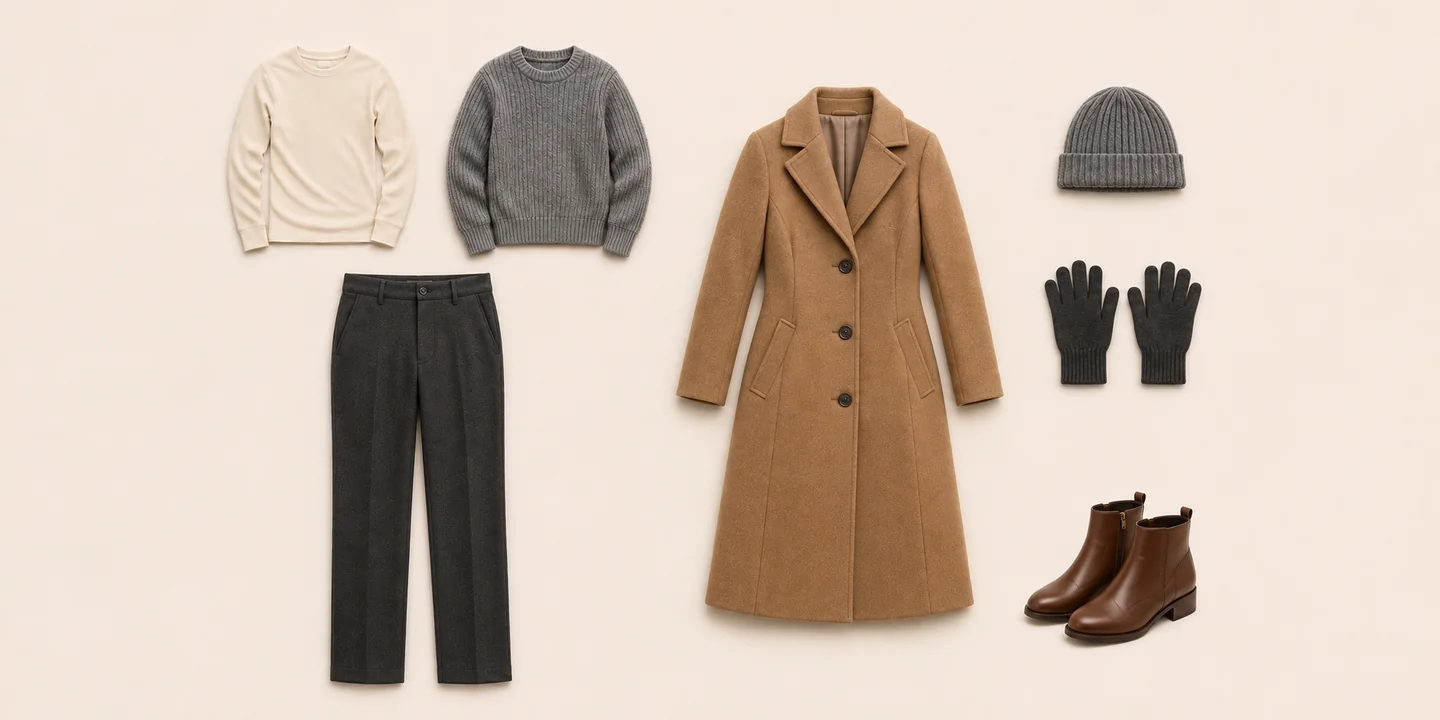
Cream long-sleeve top; Gray sweater; Camel coat; Charcoal trousers; Brown ankle boots; Gray beanie and black gloves.
Basic outfit illustration, not the only way to dress. Add or remove optional layers for your outing.
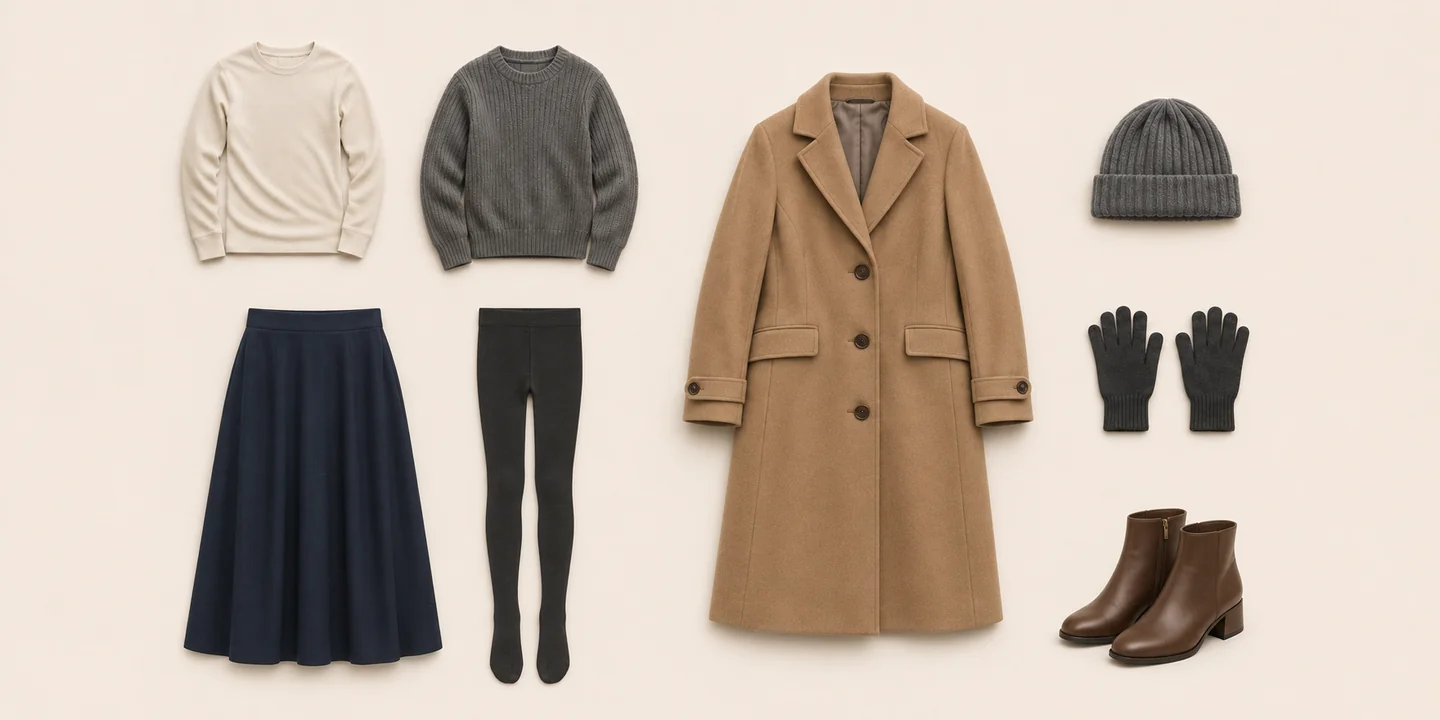
Cream long-sleeve top; Gray sweater; Camel coat; Navy skirt with black tights; Brown ankle boots; Gray beanie and black gloves.
Basic outfit illustration, not the only way to dress. Add or remove optional layers for your outing.
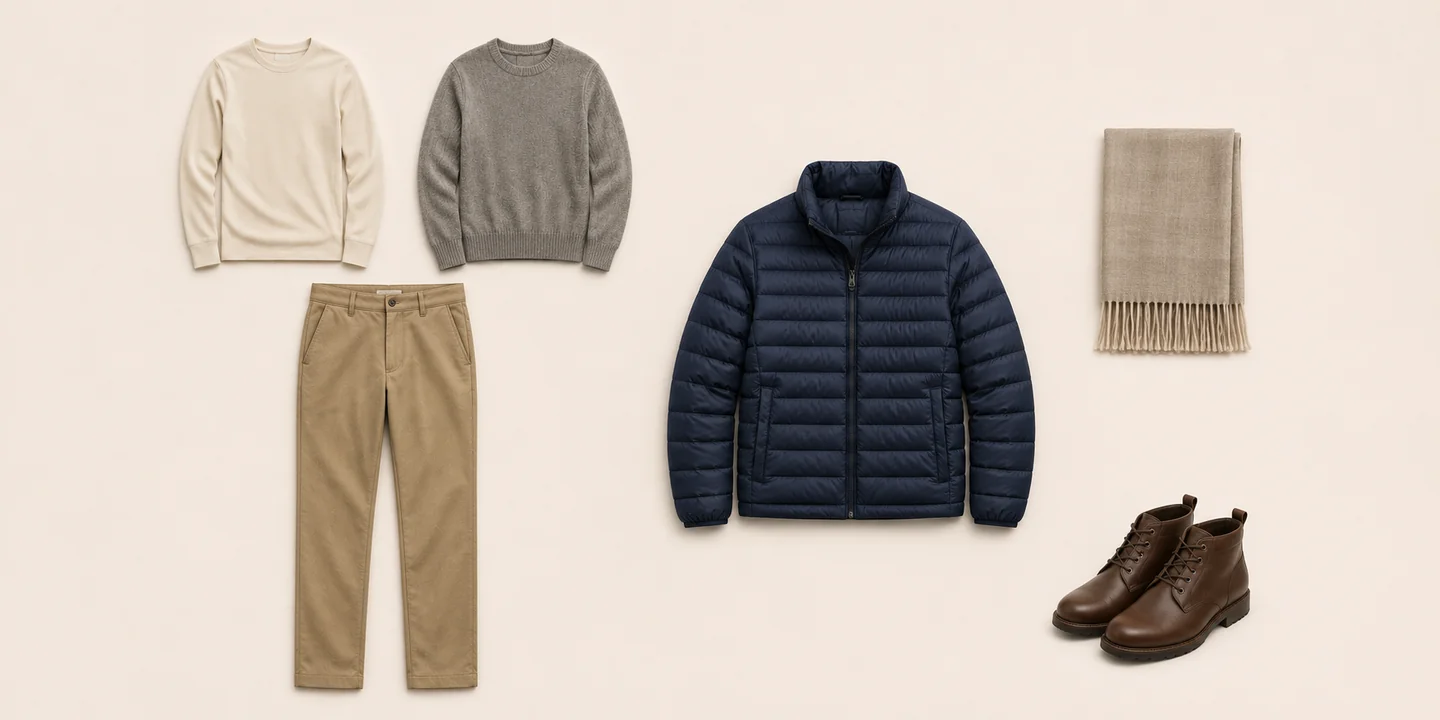
Cream long-sleeve top; Gray sweater; Navy quilted jacket; Tan trousers; Brown ankle boots; Beige scarf.
Basic outfit illustration, not the only way to dress. Add or remove optional layers for your outing.
50–54°F: womenswear pants and shared skirt examples
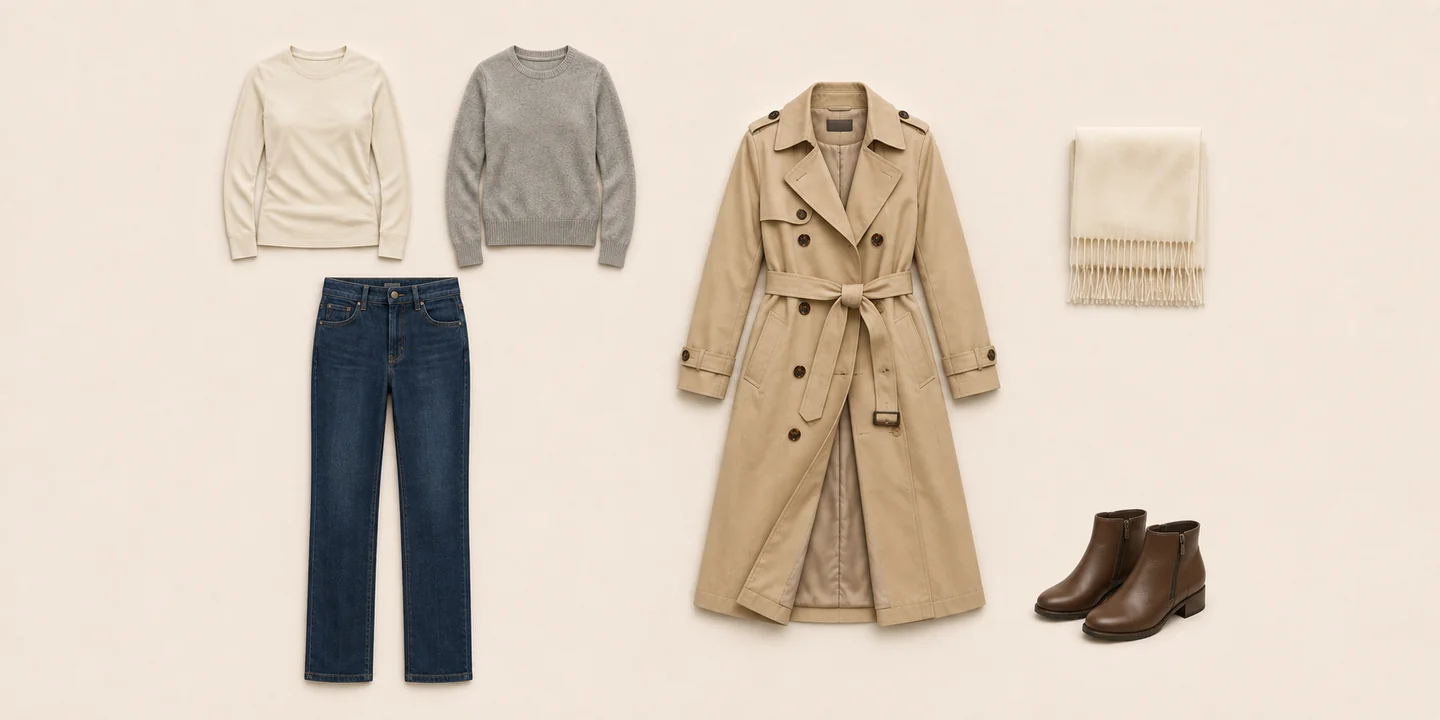
Cream long-sleeve top; Gray sweater; Beige trench coat; Blue jeans; Brown ankle boots; Beige scarf.
Basic outfit illustration, not the only way to dress. Add or remove optional layers for your outing.
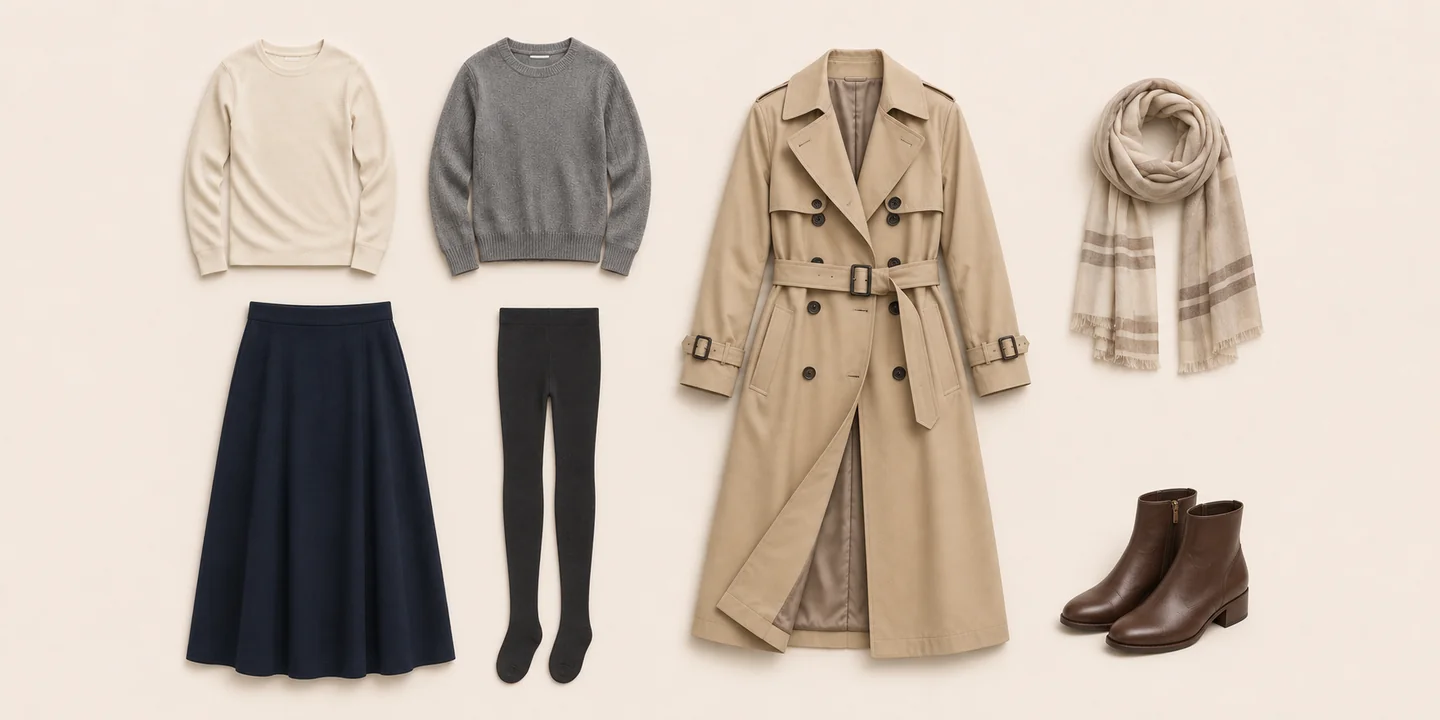
Cream long-sleeve top; Gray sweater; Beige trench coat; Navy skirt with black tights; Brown ankle boots; Beige scarf.
Basic outfit illustration, not the only way to dress. Add or remove optional layers for your outing.
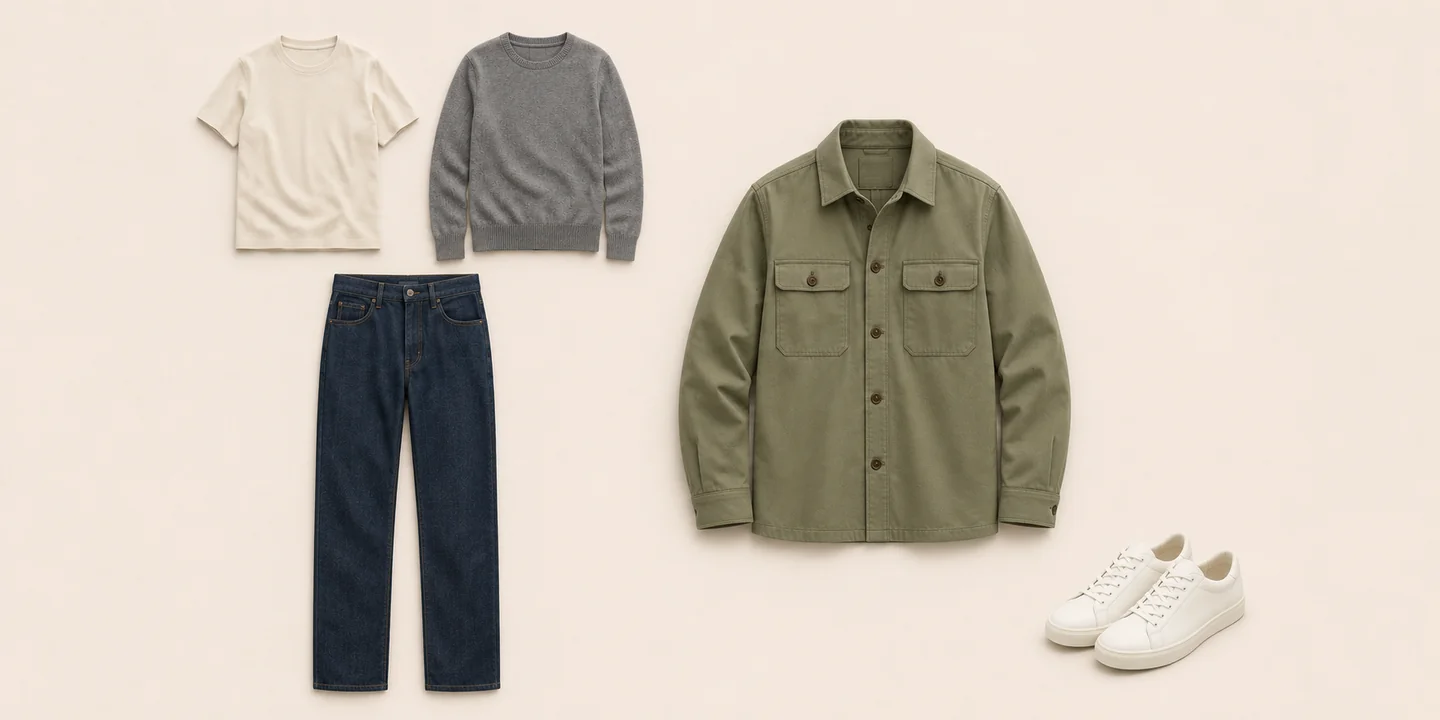
Cream T-shirt; Gray sweater; Olive shirt jacket; Dark jeans; White sneakers; None shown.
Basic outfit illustration, not the only way to dress. Add or remove optional layers for your outing.
55–59°F: womenswear pants and shared skirt examples
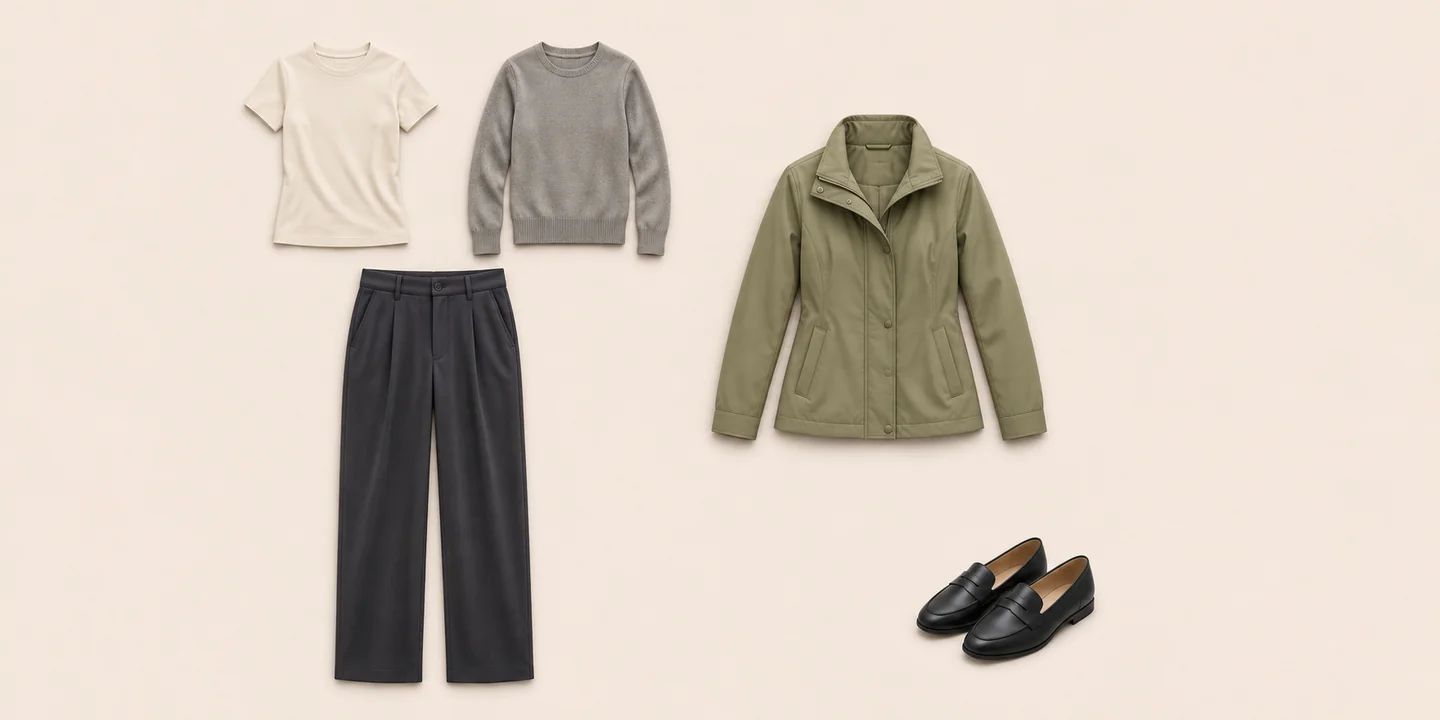
Cream T-shirt; Gray cardigan; Olive jacket; Charcoal trousers; Black loafers; None shown.
Basic outfit illustration, not the only way to dress. Add or remove optional layers for your outing.
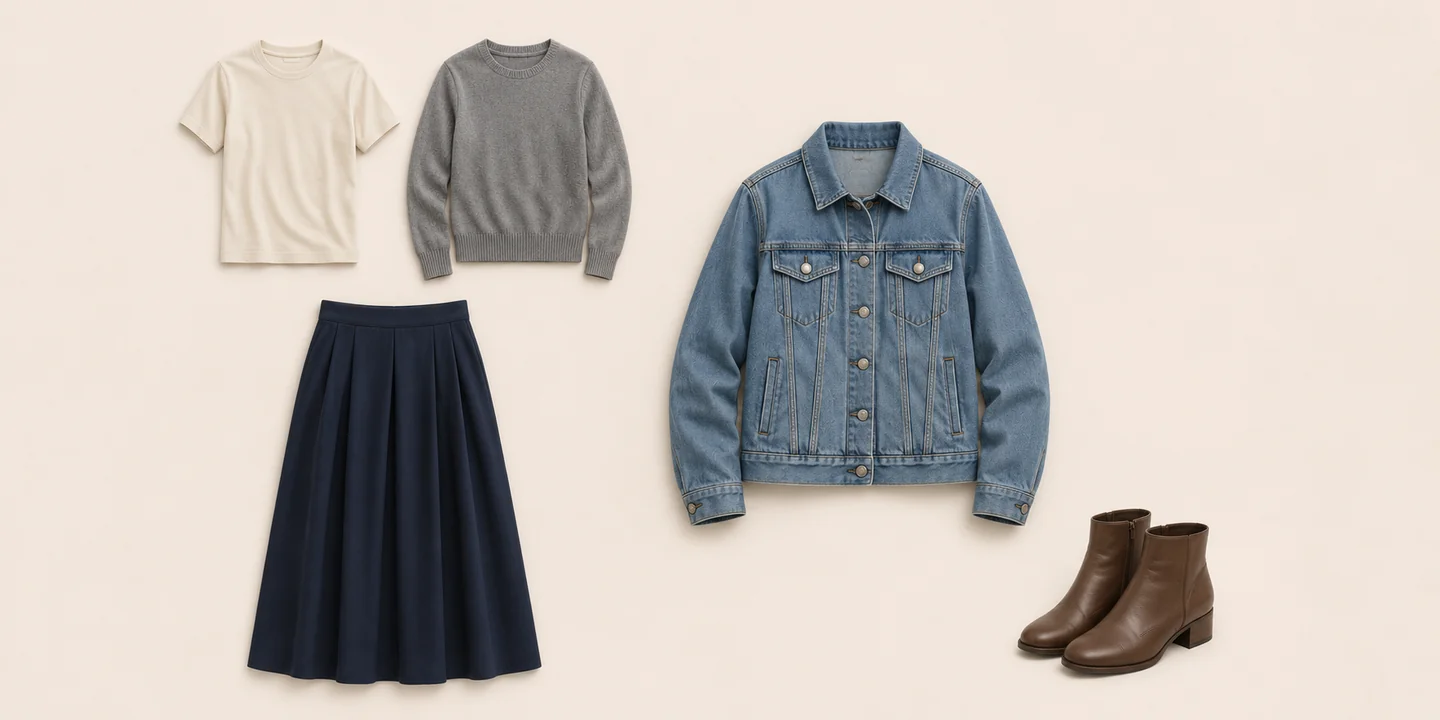
Cream T-shirt; Gray sweater; Blue denim jacket; Navy skirt; Brown ankle boots; None shown.
Basic outfit illustration, not the only way to dress. Add or remove optional layers for your outing.
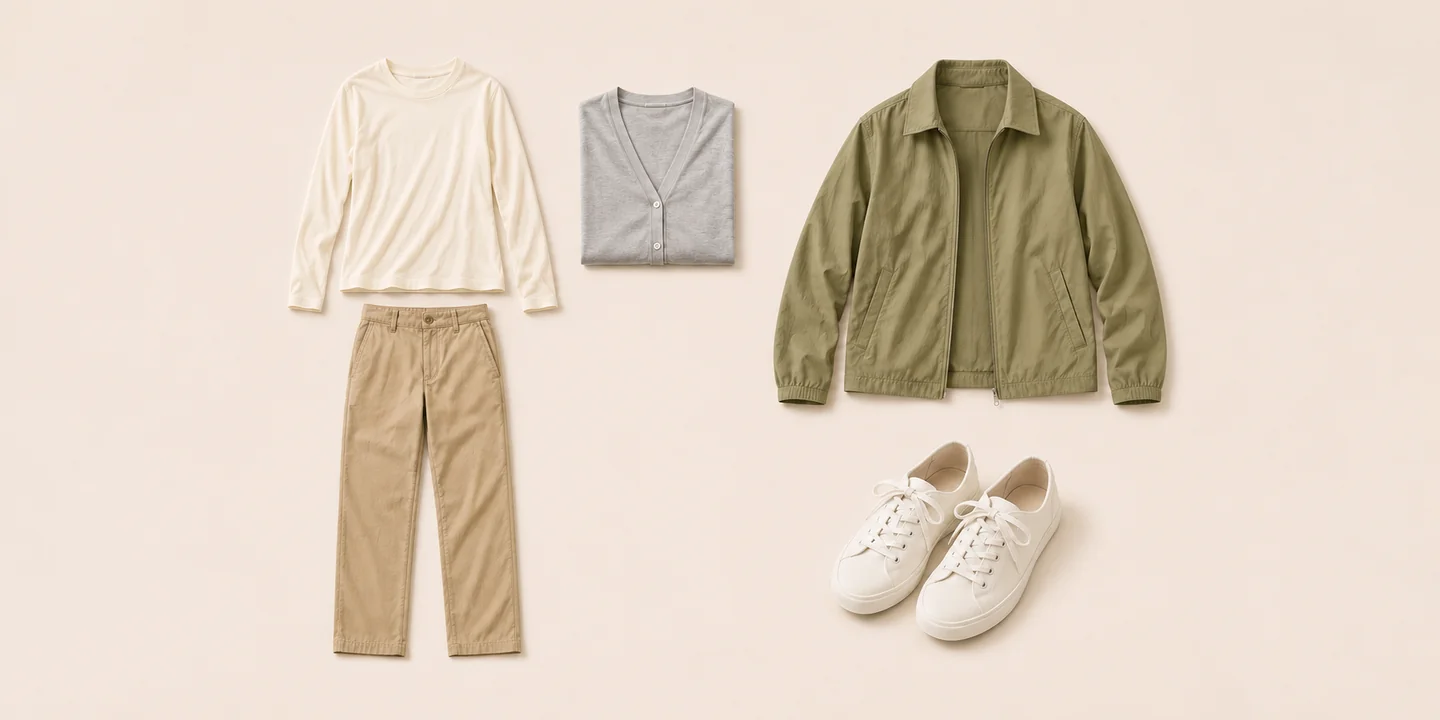
Cream long-sleeve top; Gray sweater; Olive jacket; Tan trousers; White sneakers; None shown.
Basic outfit illustration, not the only way to dress. Add or remove optional layers for your outing.
60–64°F: womenswear pants and shared skirt examples
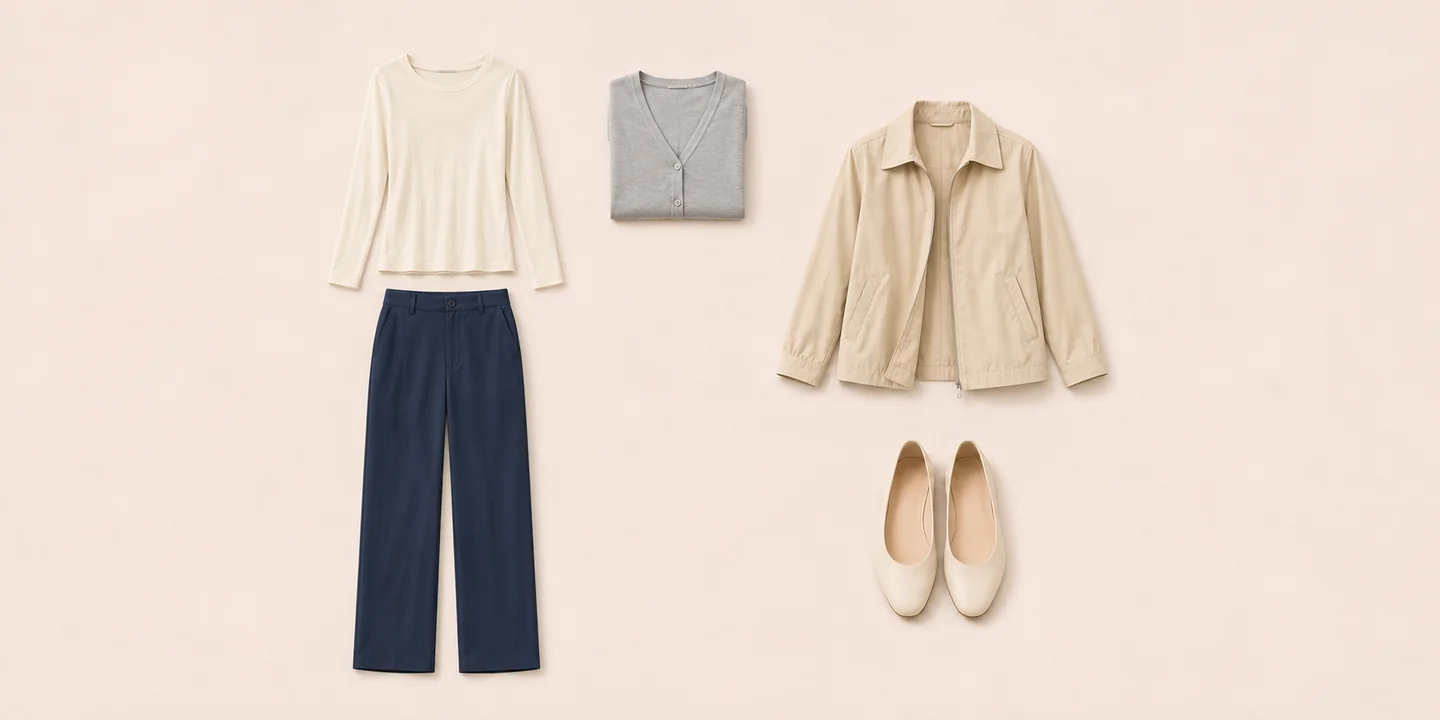
Cream long-sleeve top; Gray cardigan; Beige jacket; Navy trousers; Cream flats; None shown.
Basic outfit illustration, not the only way to dress. Add or remove optional layers for your outing.
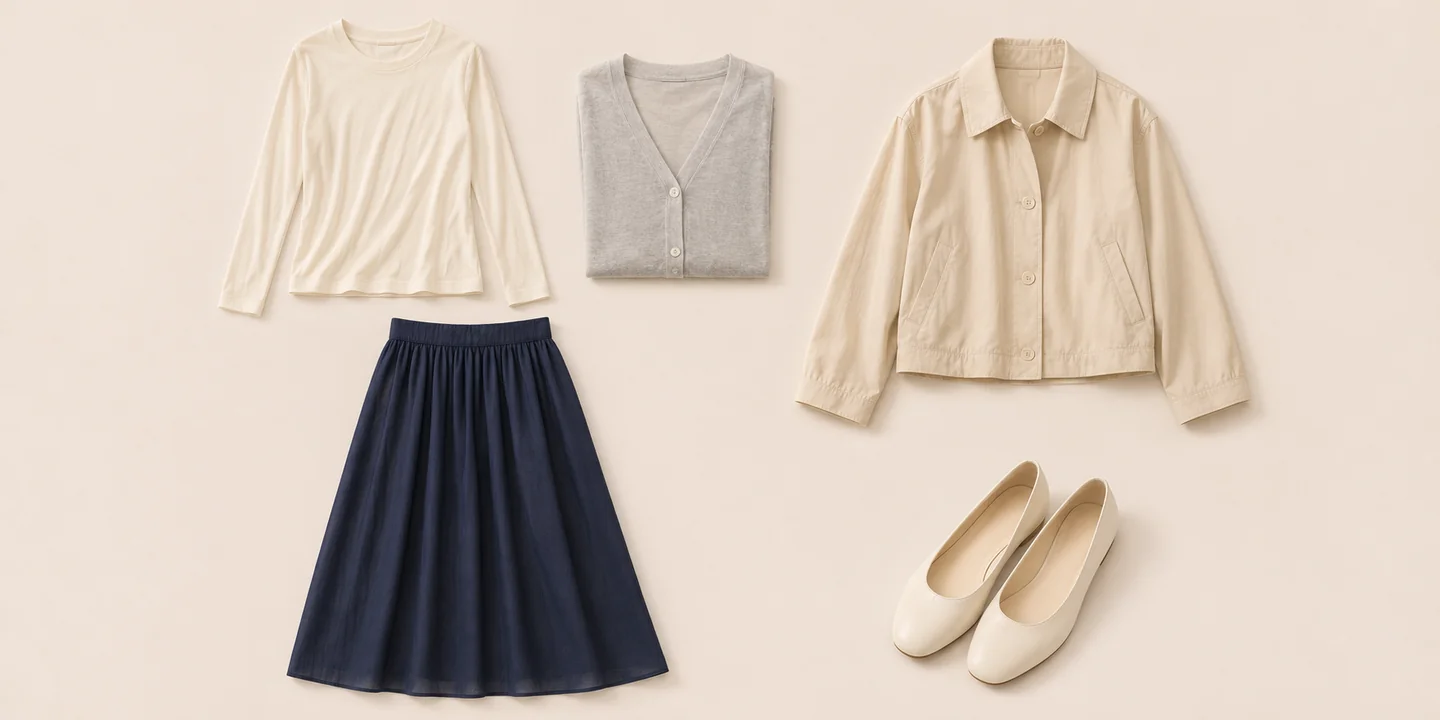
Cream long-sleeve top; Gray cardigan; Beige jacket; Navy skirt; Cream flats; None shown.
Basic outfit illustration, not the only way to dress. Add or remove optional layers for your outing.
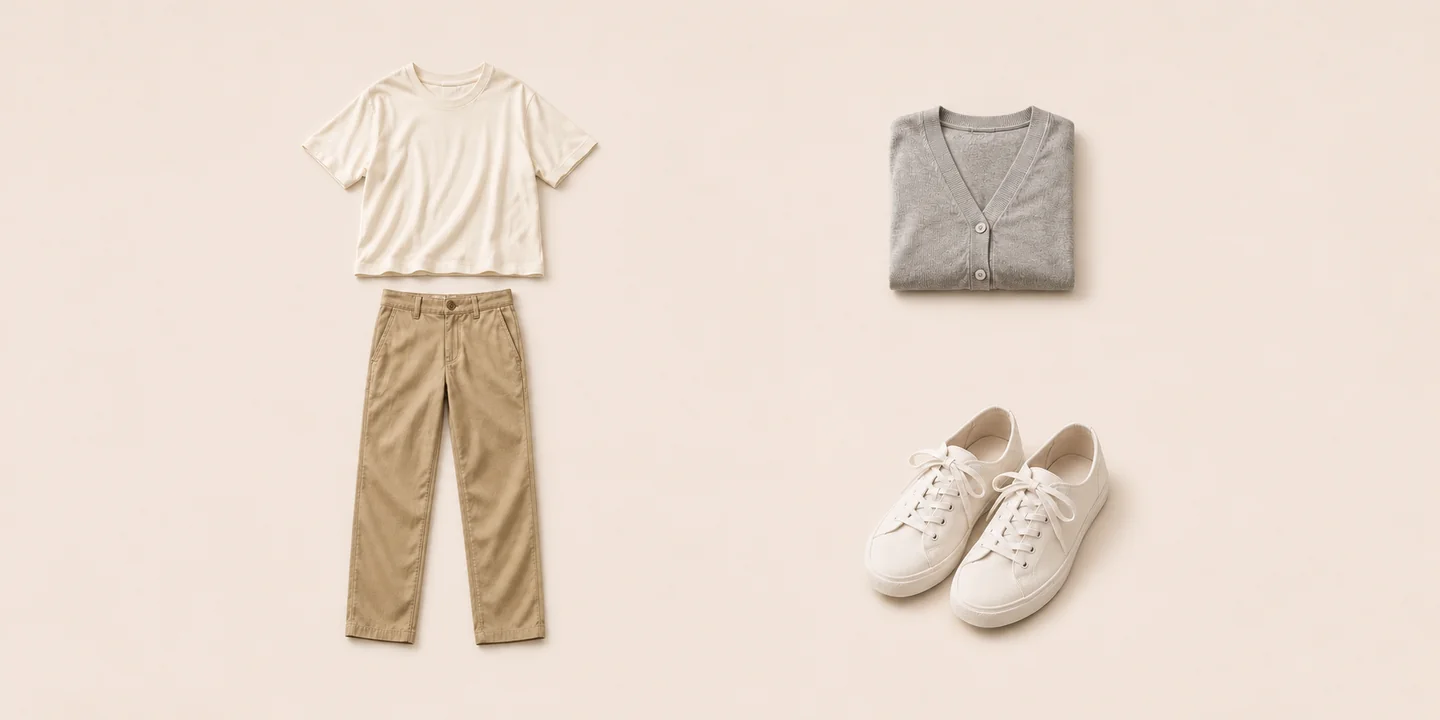
Cream T-shirt; Optional gray cardigan; None shown; carry a layer if needed; Tan trousers; White sneakers; None shown.
Basic outfit illustration, not the only way to dress. Add or remove optional layers for your outing.
65–69°F: womenswear pants and shared skirt examples
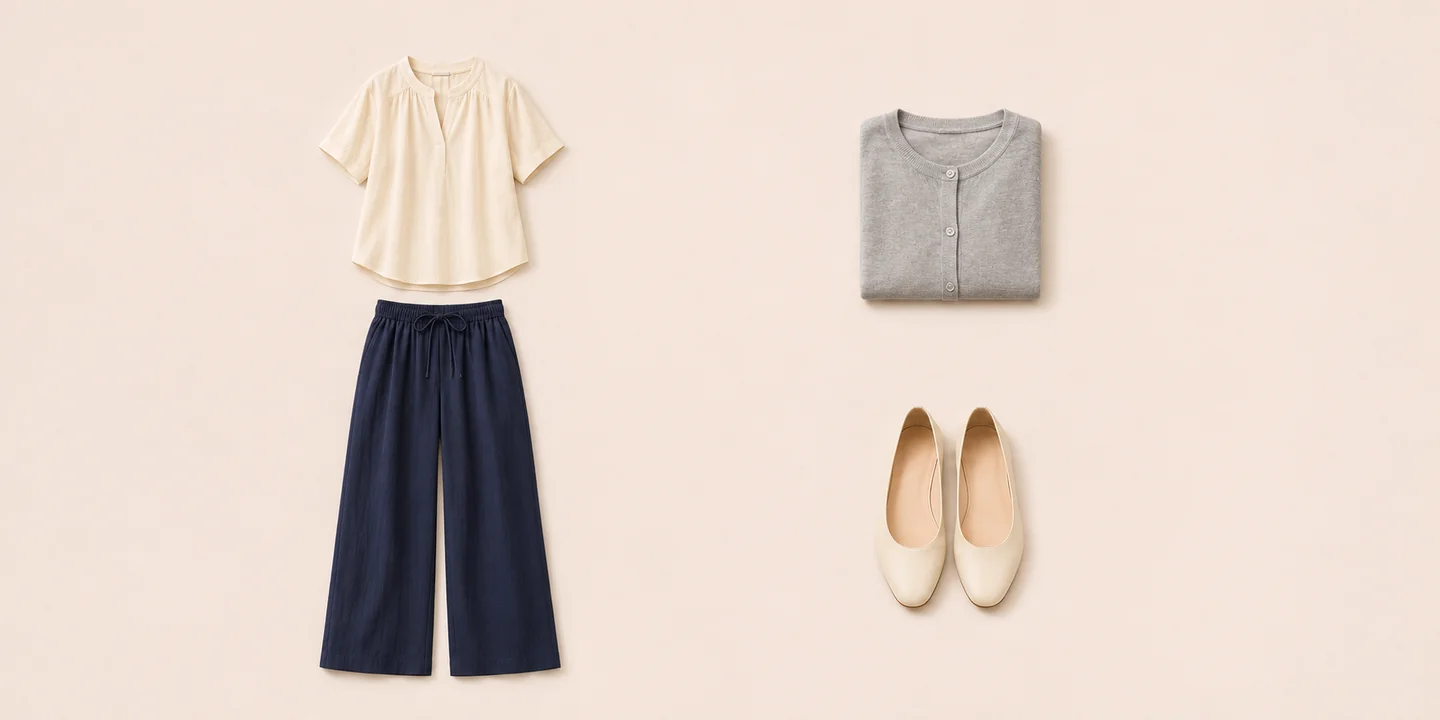
Cream short-sleeve blouse; Optional gray cardigan; None shown; carry a layer if needed; Navy wide-leg trousers; Cream flats; None shown.
Basic outfit illustration, not the only way to dress. Add or remove optional layers for your outing.
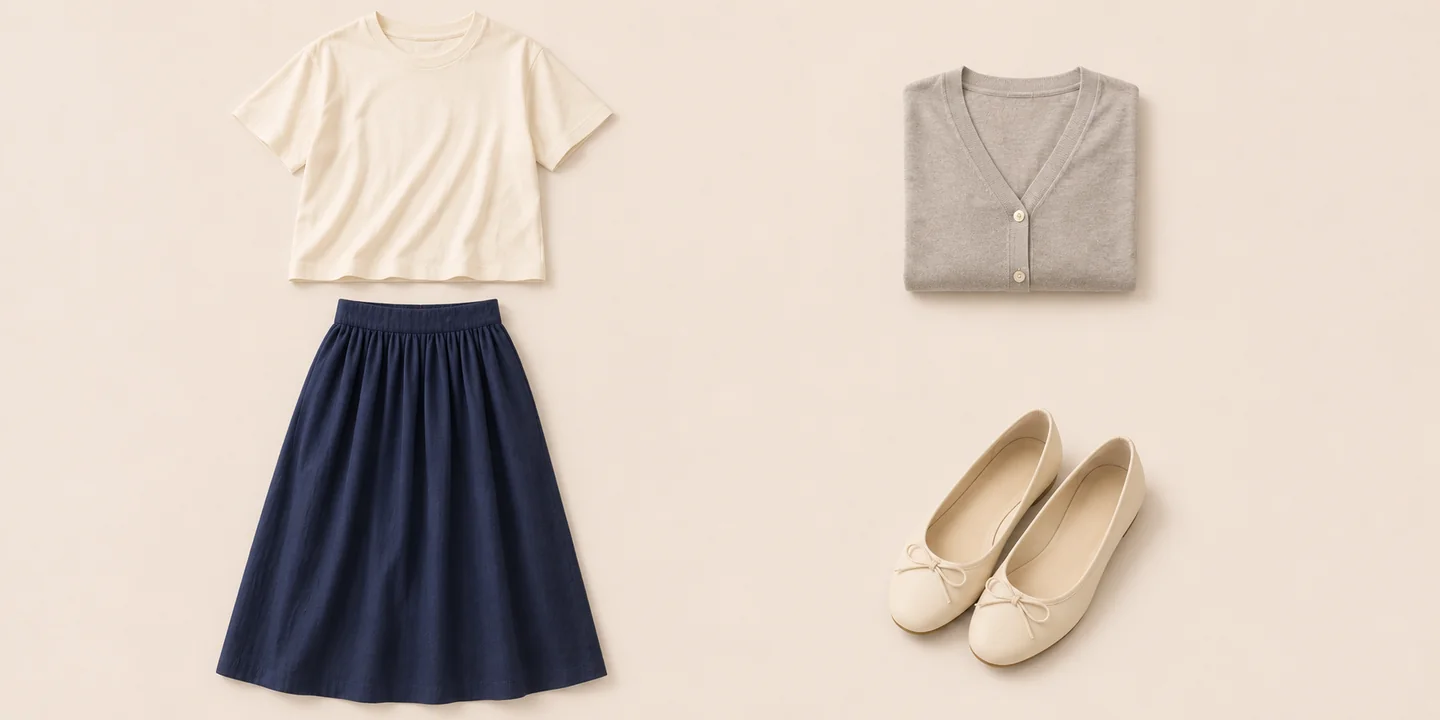
Cream T-shirt; Optional gray cardigan; None shown; carry a layer if needed; Navy skirt; Cream flats; None shown.
Basic outfit illustration, not the only way to dress. Add or remove optional layers for your outing.
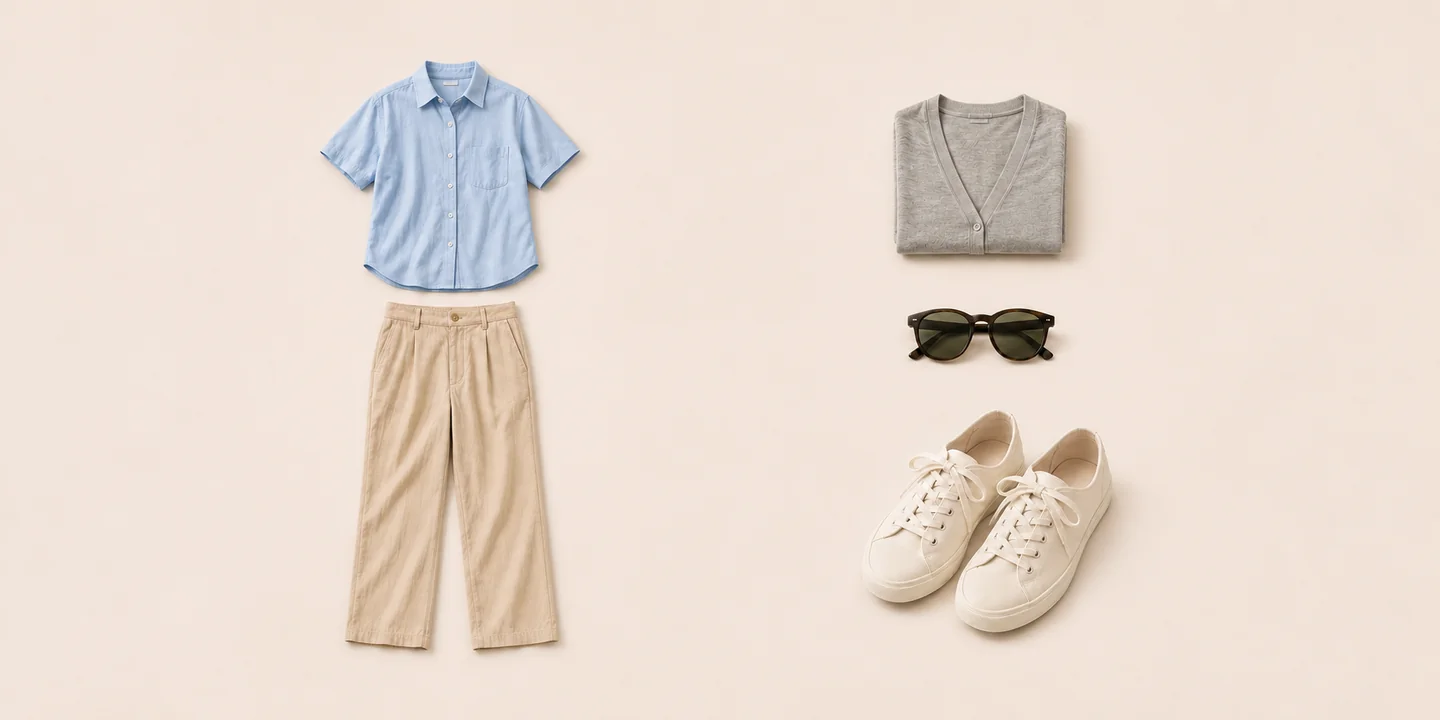
Light blue short-sleeve shirt; Optional gray cardigan; None shown; carry a layer if needed; Beige trousers; White sneakers; Sunglasses.
Basic outfit illustration, not the only way to dress. Add or remove optional layers for your outing.
70–79°F: womenswear pants and shared skirt examples
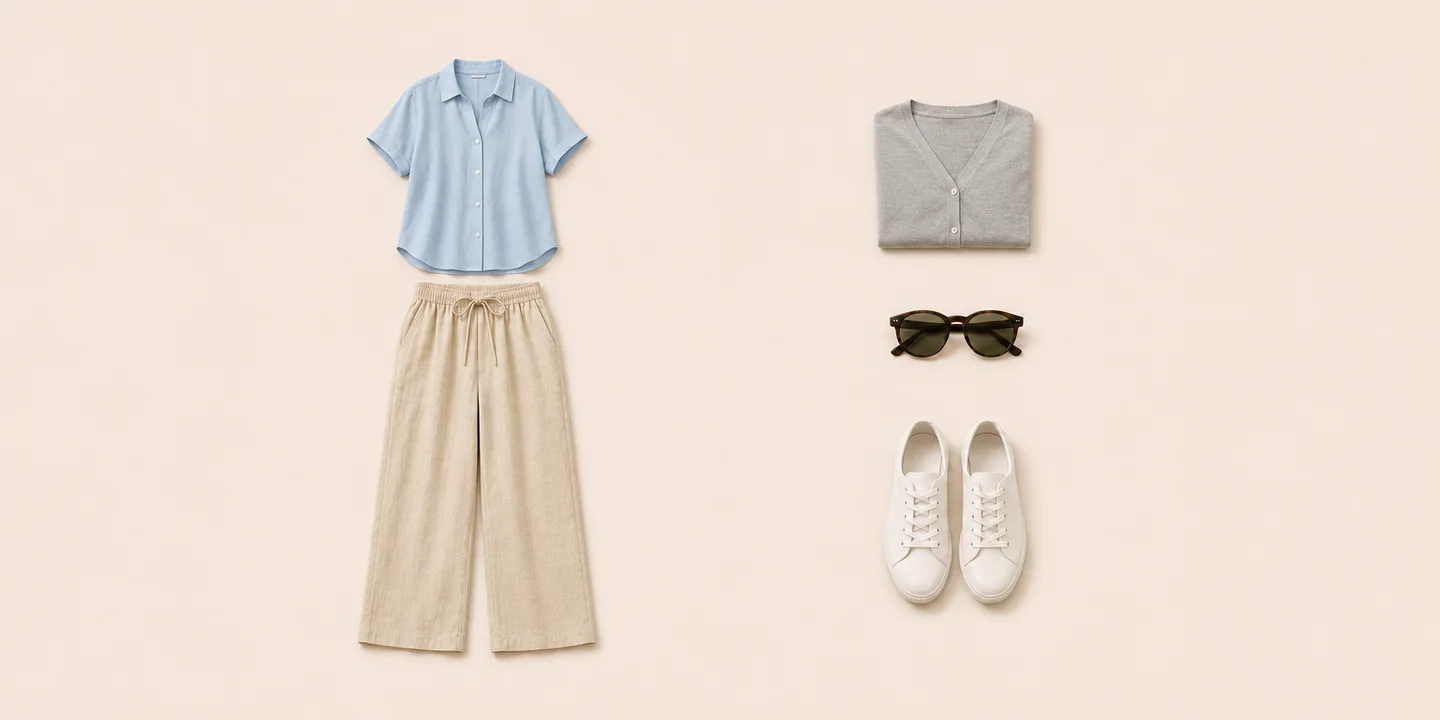
Light blue short-sleeve blouse; Optional gray cardigan; None shown; carry a layer if needed; Beige wide-leg trousers; White sneakers; Sunglasses.
Basic outfit illustration, not the only way to dress. Add or remove optional layers for your outing.
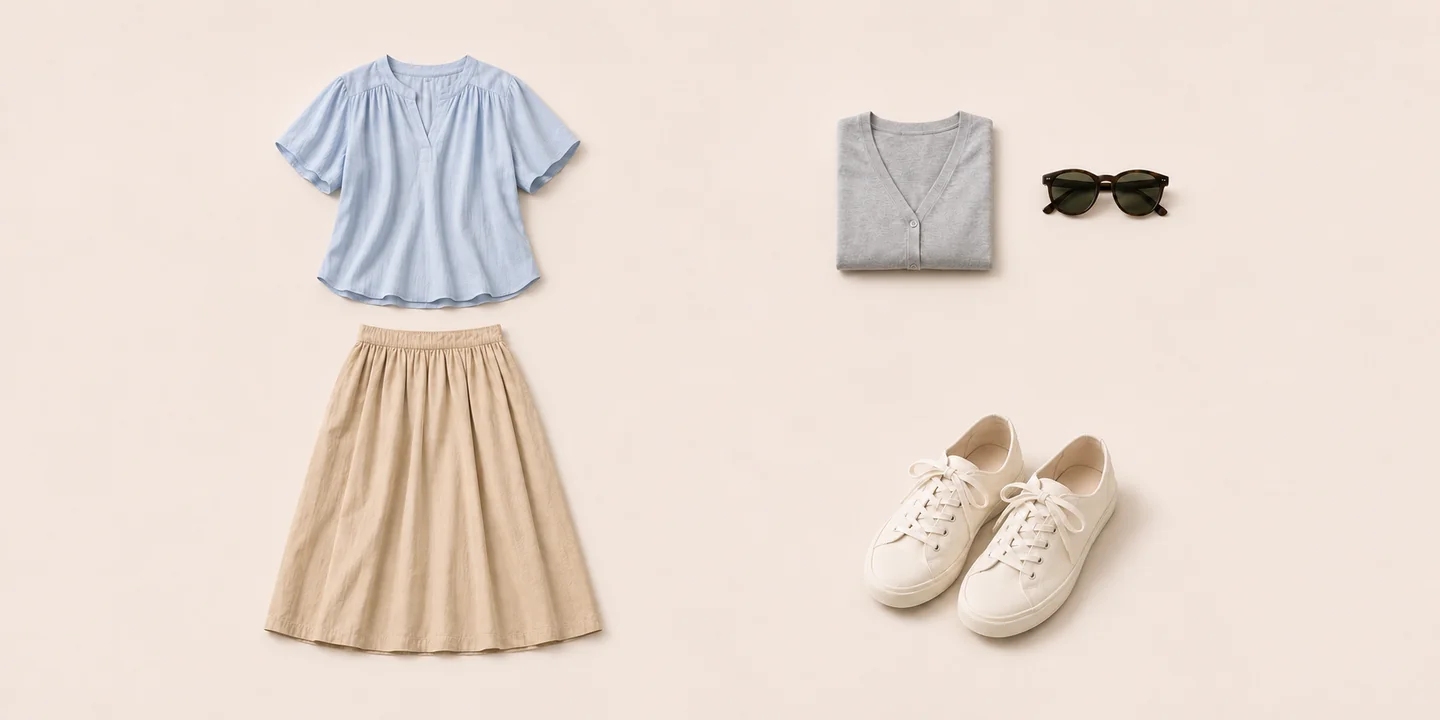
Light blue short-sleeve blouse; Optional gray cardigan; None shown; carry a layer if needed; Beige skirt; White sneakers; Sunglasses.
Basic outfit illustration, not the only way to dress. Add or remove optional layers for your outing.
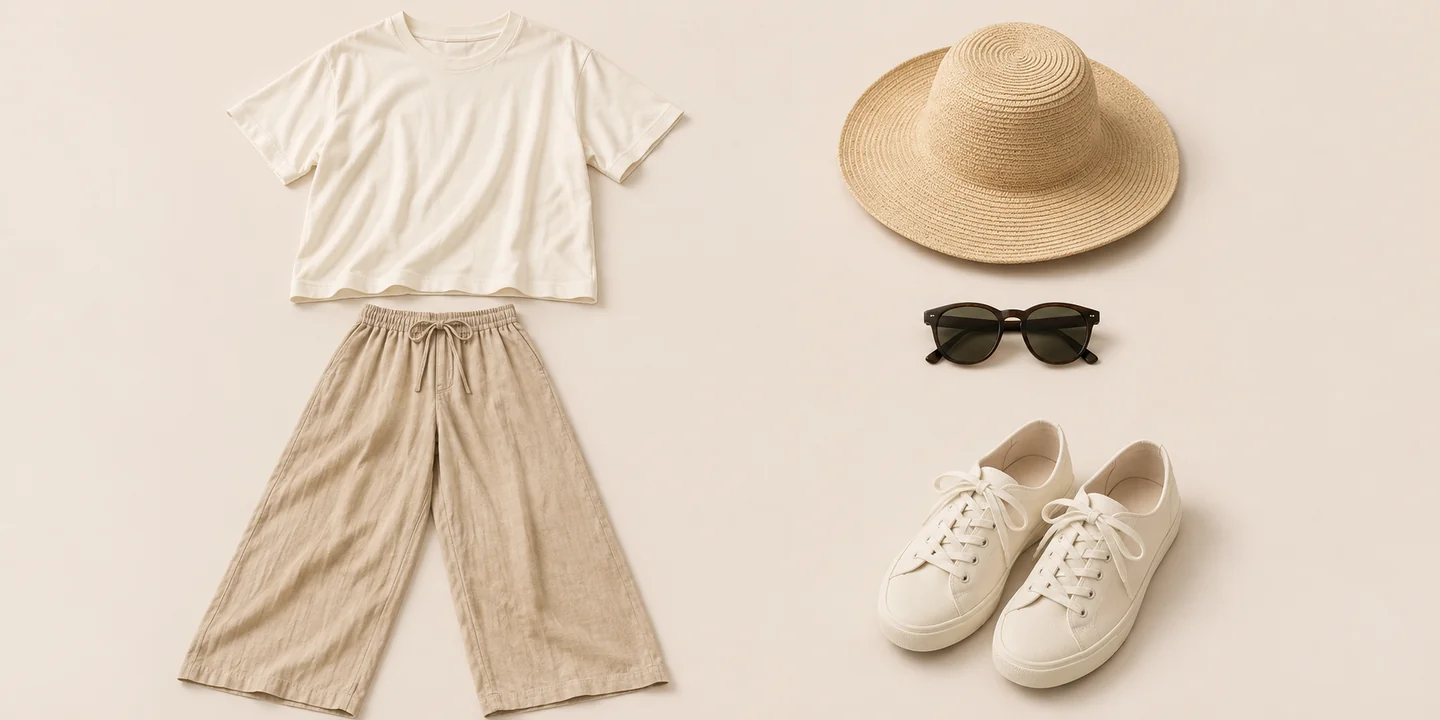
Cream T-shirt; None shown; None shown; add a layer if your venue requires it; Beige shorts; White sneakers; Straw hat and sunglasses.
Basic outfit illustration, not the only way to dress. Add or remove optional layers for your outing.
80°F and above: womenswear pants and shared skirt examples
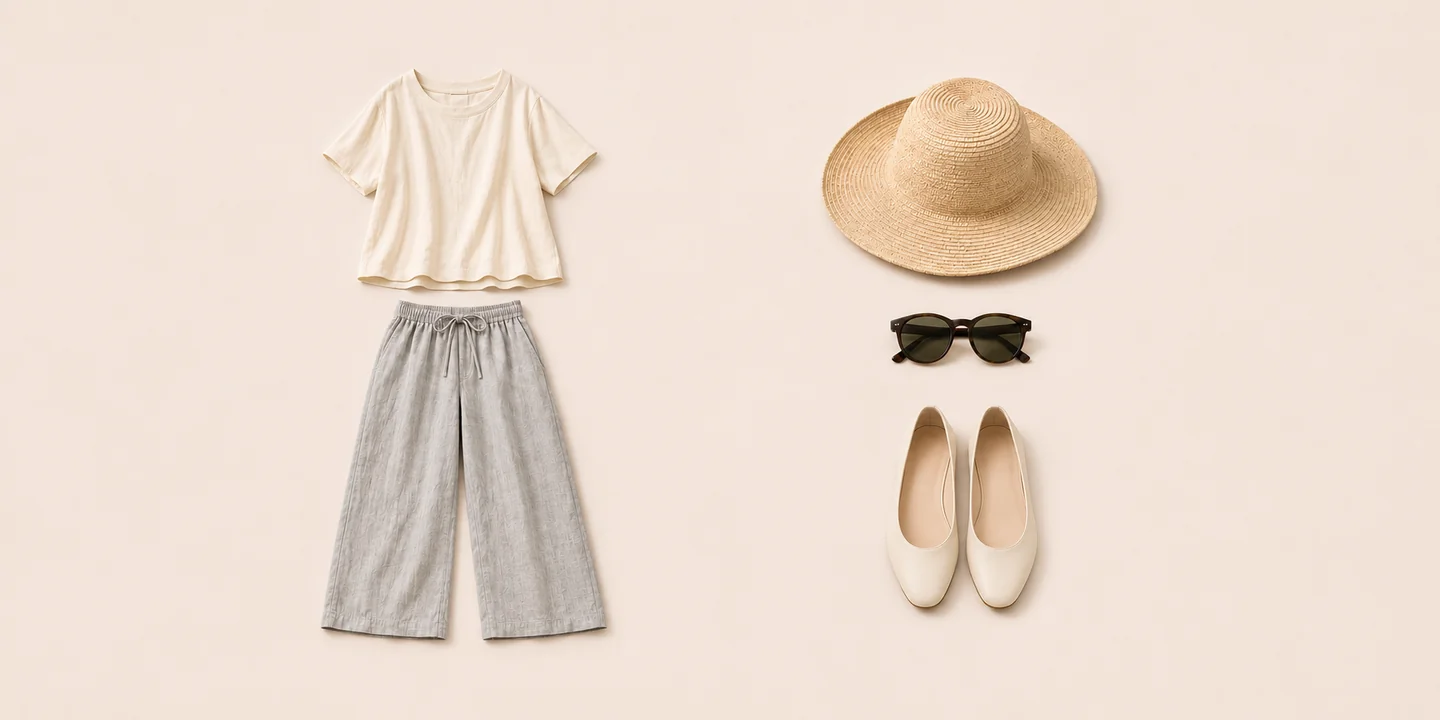
Cream short-sleeve blouse; None shown; None shown; add a layer if your venue requires it; Light gray wide-leg trousers; Cream flats; Straw hat and sunglasses.
Basic outfit illustration, not the only way to dress. Add or remove optional layers for your outing.
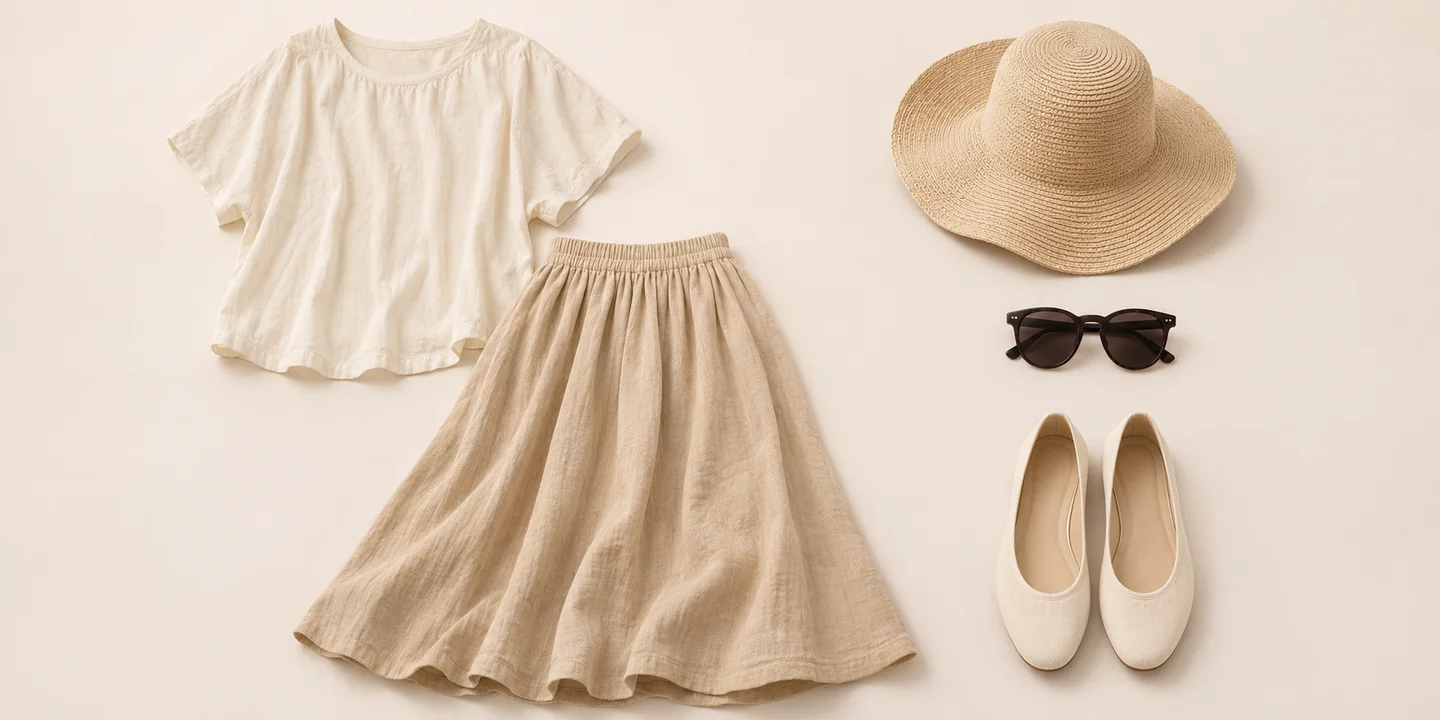
Cream short-sleeve top; None shown; None shown; add a layer if your venue requires it; Beige skirt; Cream flats; Straw hat and sunglasses.
Basic outfit illustration, not the only way to dress. Add or remove optional layers for your outing.
The pictures are basic outfit illustrations, not the only suitable combinations. Each of the eight bands has a basic pants example; expand a band for the womenswear pants and shared skirt examples, even without JavaScript. Dressing in wind or rain may need different outerwear or shoes: the tool hides the general picture when those adjustments conflict. Specific events use their own guide checklist instead of a general temperature picture. Optional cardigans and travel layers stay optional in your checklist.
What to wear today below 40°F
Wear a long-sleeve base layer, a thick sweater or fleece, and a warm coat. Pick warm trousers, wool-blend pants, or jeans over thermal leggings, and sturdy boots with a grip. Add a hat, gloves, and scarf. The National Weather Service lists warm clothes, gloves, a hat, sturdy boots, and a jacket as the baseline for cold weather. Dress for the outdoors even on a short trip, because a delay or a stalled car turns a short trip into a long one. Source Source
What to wear today at 40–49°F
Wear a long-sleeve top, a sweater or fleece, and a jacket or coat that is warmer than the one you wear in spring. Jeans, chinos, or corduroys work, and so do closed shoes or boots. A hat and gloves are worth packing if you will wait outside, such as at a bus stop or a game.
What to wear today at 50–59°F
Split this decade in two. At 50–54°F, wear a long-sleeve tee or thermal top, a sweater, hoodie, or fleece, and a light puffer, wool coat, or lined trench, with jeans and boots or closed sneakers. At 55–59°F, drop to a long-sleeve tee under a light sweater, and swap the coat for a denim jacket, trench, or shirt jacket. Sneakers, loafers, and ankle boots all work. A thin scarf covers the breezy mornings. See the 50 degree layering chart for the full comparison.
What to wear today at 60–69°F
At 60–64°F, wear a long-sleeve tee or thin knit, a light sweater or overshirt, and a light denim or utility jacket, with jeans or chinos. At 65–69°F, switch to a T-shirt with an optional thin cardigan and leave the jacket at home by day, though carrying one for the evening pays off. Shorts only make sense at the high end if you run warm and the sun is out. The 60 degree layering chart has the details.
What to wear today at 70–79°F
Wear a lightweight cotton or linen-blend top with light trousers, a skirt, or shorts. Carry a thin layer for air-conditioned offices and restaurants, and bring sunglasses and sunscreen if you will be out for hours. Comfortable walking shoes beat dressy flats on any route longer than a few blocks.
What to wear today at 80°F and above
Wear a loose, lightweight top and lightweight shorts, a skirt, or loose trousers. The National Weather Service recommends lightweight, loose-fitting, light-colored clothing in the heat and advises keeping direct sun exposure low. Skip the jacket unless rain or an overcooled room calls for one. Source
What to wear today: jeans, pants, or shorts?
For everyday wear, start with jeans or long pants below 65°F. At 65–69°F, shorts can work if you run warm and it’s sunny. From 70°F up, shorts, a skirt, or lightweight pants can work. Select the hour you’ll be outside and check the Bottoms recommendation for your city. Below 40°F, try warm trousers or lined pants. At 80°F and above, lightweight shorts are a comfortable option. If you prefer a dress or skirt, choose that route in the tool, add warm tights or leggings below 60°F, and wear shoes you can walk in.
Adjust what to wear today for wind, rain, and where you will be
Feels-like temperature sets the base for what to wear today. Wind, rain, and time outdoors adjust it. Pick the conditions you expect and the tool applies the changes shown here.
| Condition | What changes | Wear |
|---|---|---|
| Breezy or windy | Outer layer becomes wind-blocking | A windbreaker or shell over your sweater |
| Light rain | Outer layer becomes a rain shell; shoes suit wet ground | A hooded rain jacket and water-resistant shoes |
| Heavy rain | Same as light rain, plus a dry-change reminder | A rain shell, waterproof boots, and a spare pair of socks in your bag |
| Mostly indoors | Removable layers | A cardigan or overshirt you can drop at your desk |
| Indoors and outdoors | Easy-carry layer | A jacket that folds into your bag |
| Mostly outdoors | Plan for the hours outside | Your temperature band, plus a warmer layer for the coldest hour |
On a narrow screen, scroll the table sideways.
Wind makes cold days feel colder. The National Weather Service defines wind chill only for temperatures at or below 50°F and wind speeds above 3 mph. At 45°F with a 15 mph wind, its formula gives a wind chill near 38°F. The what to wear today tool therefore starts in the below-40°F band before applying your comfort choice. Wind chill assumes no solar warming; the tool does not add a sunshine adjustment. Source
For automatic what to wear today options, forecast wind below 10 mph maps to Calm, 10 to under 20 mph to Breezy, and 20 mph or more to Windy. A reported speed range uses its upper end. Rain chances below 30% map to None, 30% to under 60% to Light, and 60% or more to Heavy planning. These are editorial rain-preparation proxies: probability does not measure intensity or guarantee wet ground. The selected hour supplies its own wind and rain chance; the period fallback uses its own values. Choosing another hour resets the Wind and Rain planning options to that hour’s values. Missing hourly values are shown as unavailable rather than borrowed from a different period. Missing values leave the corresponding option for you to choose. The result labels each option as forecast-derived or user-selected. You can change either; the numeric forecast wind and humidity still describe the weather used for Feels like. Typing your own temperature clears that forecast context.
What to wear today for women and men
The tool asks whether you want pants, a skirt or dress, or either. Choose the route that matches the clothes you want to wear. The table shows typical outfits at six temperatures.
| Temperature | Women | Men |
|---|---|---|
| 35°F | Wool coat over a turtleneck sweater, fleece-lined leggings under straight trousers, insulated boots, beanie, gloves | Down parka over a merino base and fleece pullover, wool-blend trousers or lined jeans, insulated boots, beanie, gloves |
| 45°F | Quilted jacket, crewneck sweater, corduroys or a knit midi skirt with thick tights, ankle boots | Fleece-lined chore jacket, heavyweight henley, dark jeans, leather boots |
| 55°F | Trench coat, lightweight knit, straight jeans, loafers | Shirt jacket over a long-sleeve tee, chinos, sneakers |
| 65°F | T-shirt, thin cardigan, jeans or a midi skirt, flats | Polo, overshirt for evening, chinos, loafers or sneakers |
| 75°F | Linen-blend top, light trousers or a cotton skirt, sandals or sneakers, sunglasses | Cotton tee or camp-collar shirt, light chinos or shorts, sneakers |
| 88°F | Loose sleeveless cotton top, linen shorts or a flowy sundress, sandals, hat | Loose breathable tee, 7-inch shorts, sandals or sneakers, cap |
On a narrow screen, scroll the table sideways.
Either route fits any row: a woman can wear the men's column and a man can wear the women's column. The optional Menswear and Womenswear labels select clothing examples; they do not identify your gender or change the comfort offset. The tool does not ask for body measurements.
What to wear today for work, school, or church
The rule: your workplace, school, or church sets its dress code, and that code decides your outfit. Use the weather layers on top of it.
Work. Start with a collared shirt or neat knit and your required shoes, then add a removable layer. At 40–49°F, a blazer or wool coat over a sweater works. At 70°F and up, a short-sleeve button-down or a lightweight blouse works, with a cardigan for the office air conditioning.
School. Dress kids in layers they can take off at their desk: a long-sleeve tee under a hoodie or fleece below 60°F, then a T-shirt and a light jacket for the walk in. Pack a rain jacket on wet mornings. Sneakers handle recess and the walk. The National Weather Service advises finding a warm spot for children who wait outside for the school bus in the cold. Source
Church. Put on the required or customary outfit first, such as a dress or collared shirt with slacks, then add a coat, tights, or scarf for the walk from the car. A wool coat covers a dress or a suit in the 40s.
What to wear today for a run, a walk, or a game
For a run or a hike, dress for ten degrees warmer than the number on the screen, because your body heats up fast. Below 40°F, wear a moisture-wicking base layer, a thin fleece, and gloves, and peel the fleece off when you warm up. At 60–69°F, a T-shirt and shorts or leggings suit most runners, and a light windbreaker covers a cool start. For a walk, wear what you would for errands plus comfortable sneakers.
For a ballgame, a theme park, or any day-long event, dress for the coldest hour, not the warmest. Wear sneakers that handle long walking, bring a packable rain jacket, and carry a sweater for the night. For more activities, browse our activity clothing guides.
What should I wear tomorrow?
To decide what to wear tomorrow, check the forecast the evening before and dress for the coldest hour you will spend outside, not the daily high. Switch the tool to Tomorrow: it loads the National Weather Service forecast for the next local date and starts with the lowest feels-like daytime hour when available. Lay out the layers for that hour tonight, then add rain or wind gear if the forecast calls for it.
For what to wear to work tomorrow, choose Tomorrow and the Work plan. Select your commute hour, keep one layer you can remove indoors, and check the work section above for office dress rules.
What to wear today if you have a specific event
Wear the event outfit first, then add weather layers for the trip and the time outside. In the tool, choose Event day and then Funeral, Court appointment, Jury duty, Baptism guest, or Black tie. These five guides provide explicit starting rules; the other links below remain further reading rather than automatic outfit rules.
Your event checklist marks guide-derived pieces separately from the weather travel layer and links to the guide. A hot day does not turn a tuxedo into a T-shirt or a court outfit into shorts. Rain does not silently replace formal shoes with casual shoes: keep the required shoes for the venue and check any travel change against its rules. Your final outfit still depends on the actual invitation, family request, summons, or church instructions; those take priority over our examples. When a category and route cannot both match a strict code, the event code wins: for black tie, the skirt/dress route uses a gown, while the pants route uses a tuxedo.
- Ceremonies and family gatherings: what to wear to a funeral, what to wear to a wake, and what to wear to a celebration of life. For celebrations, see what to wear to a baby shower, what to wear to a bridal shower, what to wear to a baptism, or what to wear for bat mitzvah. For a photo session, use family photo outfit ideas.
- Formal and evening plans: what to wear for grad, black tie attire, or what to wear to a Broadway show. Pack a coat you can leave in a cloakroom and shoes you can walk home in.
- Legal appointments and ID photos: what to wear to court, what to wear to jury duty, or what to wear for passport photo. Wear the required outfit under a coat you can remove at security.
How this outfit generator works
The outfit comes from fixed editorial rules: eight temperature bands, then adjustments for wind, rain, where you will be, and your plan. The same bands feed the table and the interactive result, so every layer has a visible reason. The tool never analyzes a photo, calls a text model, or asks for an account.
For what to wear today, Feels like uses the NWS wind-chill formula at or below 50°F with numeric wind above 3 mph. At 80–112°F with valid humidity and numeric wind available, it checks the WPC simple heat-index estimate before applying the Rothfusz regression and its low- or high-humidity adjustments. If that initial check is below 80°F, conditions are outside our supported range, or required data is missing, Feels like stays equal to air temperature. Heat index describes shaded conditions; the tool does not estimate direct-sun heating. Manual Wind choices never invent a numeric wind speed, so a temperature entered alone has no calculated wind chill or heat index. Source Source
Your what to wear today comfort choice changes only the temperature used to choose a band: Cold subtracts 5°F, Normal changes nothing, and Warm adds 5°F. For example, manual 48°F selects layers using 43°F, 48°F, or 53°F. Air temperature and Feels like remain unchanged on screen. The fixed 5°F step is our editorial choice, not an official standard or a measurement of your body. Adjacent choices sometimes share a band; use the clothing you own and adjust for comfort. The what to wear today conclusion and six reasons use the final band and your actual conditions, including indoor/outdoor changes and your selected plans.
For city lookup, the browser searches a static 2026 Census Places shard for a normalized name, optionally followed by a two-letter state. The lookup retains all national Places records with no population threshold. It covers Census places, not every postal city or neighborhood; use ZIP or manual temperature when a name is missing. City choices show a readable name and state; ambiguous same-name records also show an area identifier. City results use official Census names: choose a candidate before weather loads, especially when several places share a name. Search accepts an exact normalized name or, when there is no exact match, up to 30 name-prefix matches. No external geocoding is used for manual city search. On entry, FreeIPAPI can identify an approximate city from your network IP when device location is not already permitted or cannot be retrieved. Browser time zone does not restrict automatic IP lookup. The returned country determines whether the tool requests NWS weather; locations outside supported U.S. and territory coverage can use a U.S. city, ZIP, or manual temperature. The detected city is labeled approximate; a VPN or network gateway may place it elsewhere. You can change the city at any time. Detection failure never substitutes an arbitrary city. Temperature shortcuts are available immediately, including when location fails. They build an outfit for your chosen temperature, not an assumed local forecast. The weather requests share an eight-second waiting budget; after the grid lookup, period and hourly requests run together. Hourly data is shown as soon as it is usable. A period forecast is used only if hourly data is unavailable or the waiting budget expires.
For device location, the tool checks whether browser permission is already granted and only then attempts an automatic position. Otherwise Use my location, inside Change location, starts the browser request with a click. Rejected, timed-out, unsupported, or non-covered locations have city, ZIP, and manual-temperature fallbacks. Coordinates sent to api.weather.gov have at most four decimal places. A forecast describes an area, not an exact live reading at your device.
Your ZIP is looked up in a static Census ZCTA file inside your browser. ZCTAs are Census Bureau areas, and the lookup omits some postal ZIPs. The area's coordinates go to the National Weather Service for its forecast. The what to wear today tool never saves your ZIP, city input, device or area coordinates, or selections in browser storage or in a page URL. The bands are editorial choices, not official clothing or safety standards.
Choose Tomorrow to load the next local date. The tool uses the forecast location's time zone to find tomorrow's date, then loads its available daytime and nighttime hours. Tomorrow initially selects the lowest feels-like daytime hour, or the first available hour if daytime data is missing. Today starts with the current hour when available, otherwise the next available hour. Today omits expired hours. If hourly data is missing or its request fails, Today uses the period covering the current time, or the next available period if needed; Tomorrow prefers a daytime period. If no usable period exists, enter a temperature manually. Neither an hourly forecast nor the fallback is a live reading. You can override the temperature without re-entering your ZIP; doing so removes the hourly strip and its forecast-derived Feels like.
Quick questions about what to wear today
What should I wear right now?
Start with the current forecast hour in your city, or the next available hour if the current one is missing. The tool labels the forecast hour or fallback period, and both are forecasts. If you know the temperature outside, enter it manually and adjust wind, rain, comfort, and your plans. Manual entry uses air temperature as Feels like and hides the hourly forecast.
What is the outfit of the day today?
It is a layered outfit built from your temperature, conditions, comfort, and plans: base, middle layer, outer layer, bottoms, shoes, and accessories. Your what to wear today checklist includes the conclusion, air temperature, Feels like, any available forecast range hint, and all six pieces with their reasons.
What to wear today in my city?
Enter your city name and optional two-letter state, such as Los Angeles, CA, then select the matching Census place. Or use a five-digit U.S. ZIP code, keeping any leading zero, or Use my location. NWS coverage is limited; if the lookup or weather request fails, type a temperature yourself. The table and outfit examples still work without JavaScript.
What is the 3 3 3 rule for clothing?
The 333 styling method described by The Everygirl is a capsule wardrobe challenge: select three tops, three bottoms, and three pairs of shoes, then mix them into outfits. For what to wear today, use it as a way to rotate clothes you own, then add the layers your forecast and event need. It is a styling challenge, not a weather formula or a universal dress code. The tool does not require you to limit your wardrobe to nine items.
Can I save the outfit?
Use the Copy outfit button to copy the plain text, or select the visible text. The site creates no account and no saved-outfit link.
Sources
-
National Weather Service: Prepare for Cold Weather: cold-weather clothing (warm clothes, gloves, hat, sturdy boots, jacket), dressing for the outdoors on short trips, and waiting for the school bus.
-
National Weather Service: During a Heat Wave: lightweight, loose-fitting, light-colored clothing and limiting direct sun.
-
National Weather Service: Understanding Wind Chill: wind chill definition range and the sunshine adjustment.
-
NOAA Weather Prediction Center: Heat Index Equation: simple estimate, Rothfusz regression, and humidity adjustments used for what to wear today.
-
Clothes Forecast: What to Wear Today: a weather-outfit tool that splits the day into morning, day, and evening periods.
-
U.S. Census Bureau: 2026 Gazetteer Files: national Places and ZCTA representative area points for area forecasts; all Places records retained, no population threshold.
-
The Everygirl: The 333 Styling Method: three tops, three bottoms, and three pairs of shoes as a capsule wardrobe challenge.